
Money Down The Drain

You may have noticed the 50% increase in the storm water fee being accessed this year. Such drastic increases usually indicate mismanagement and the failure to perform routine maintenance of a system in the years and decades prior. A properly financed maintenance program that is well run with periodic, but reasonable, rate increases does not need drastic assessments. Then again, this is Lakewood, Colorado. A city in a state that… Well, just look around.
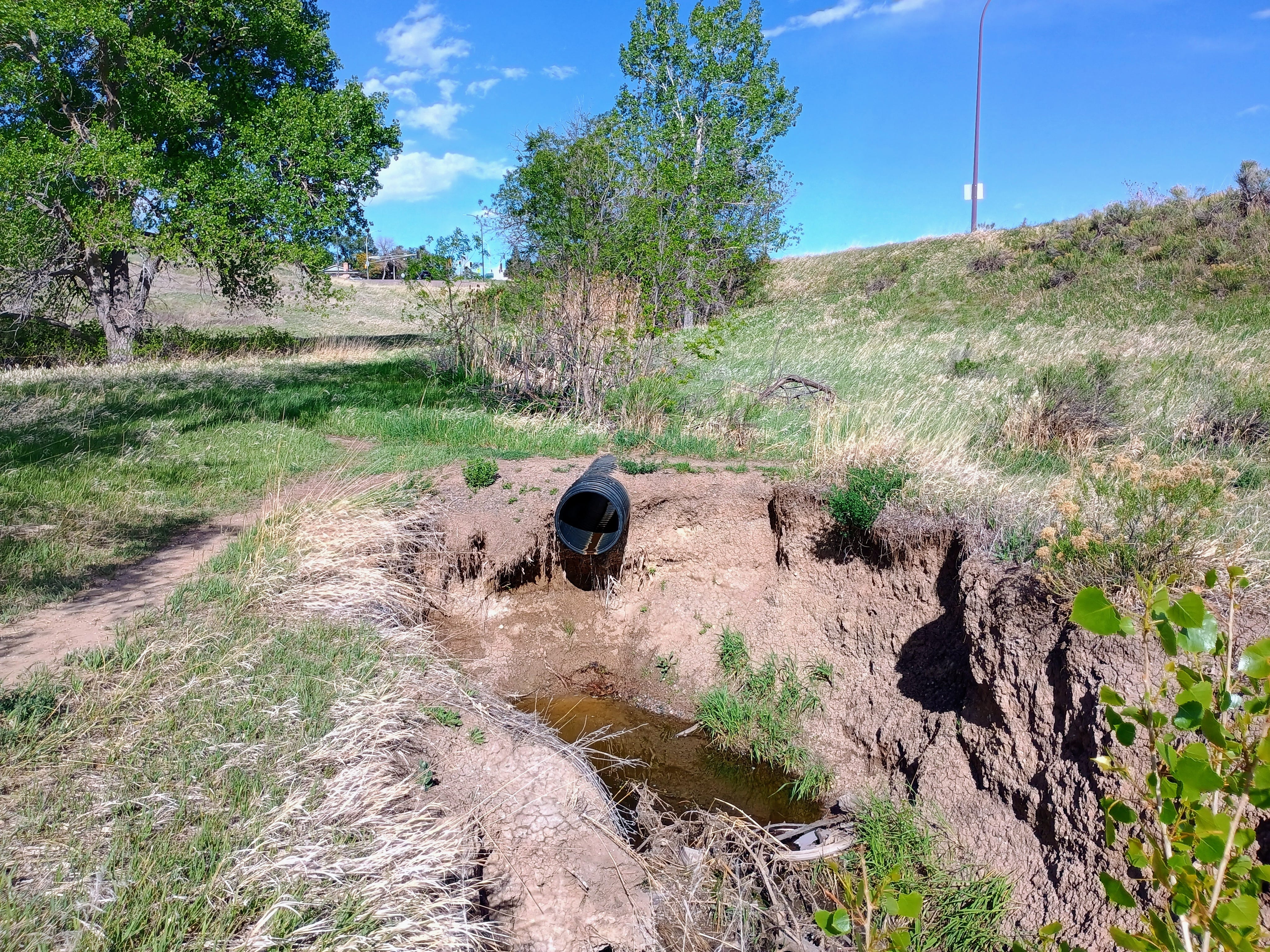
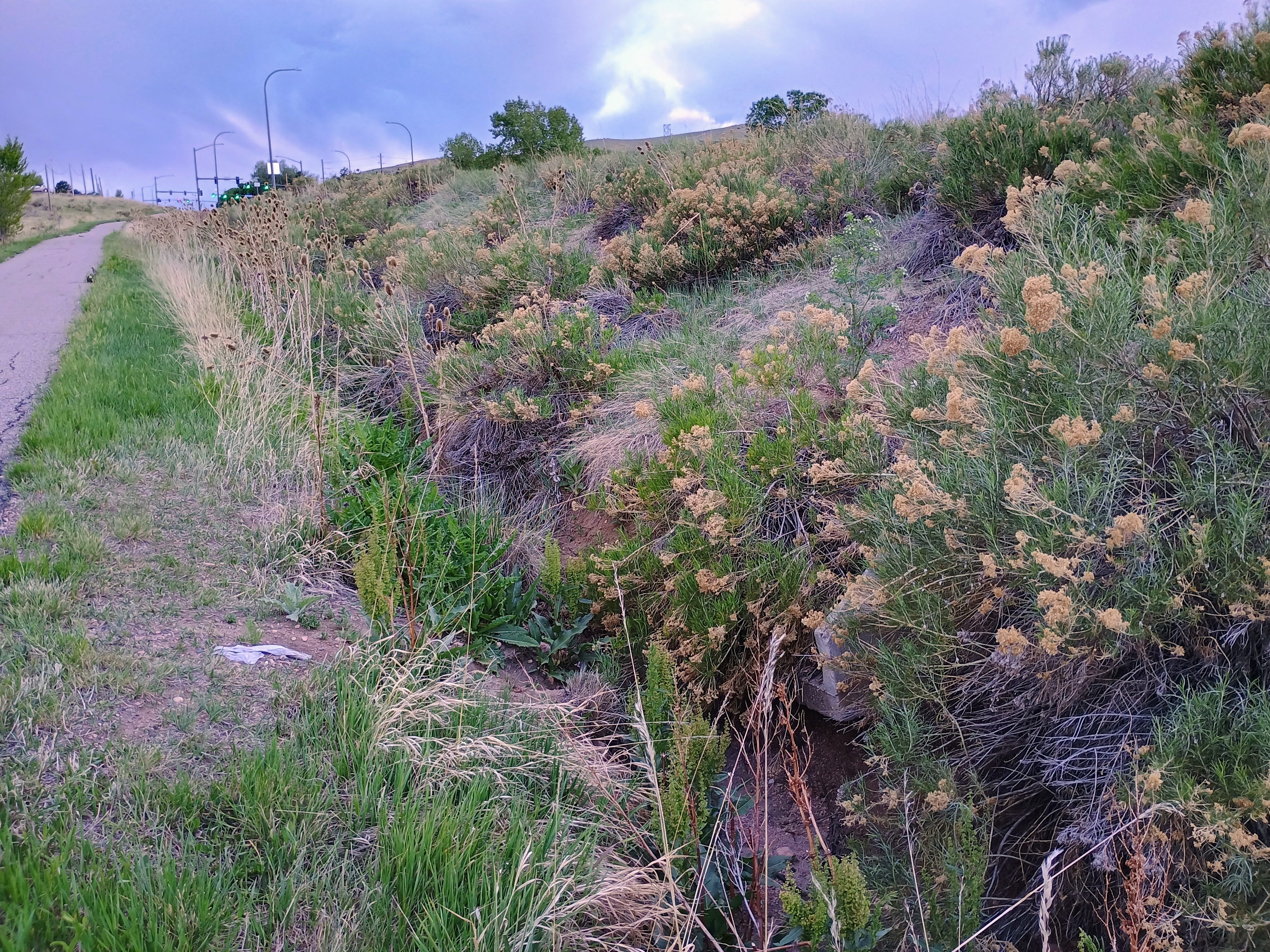
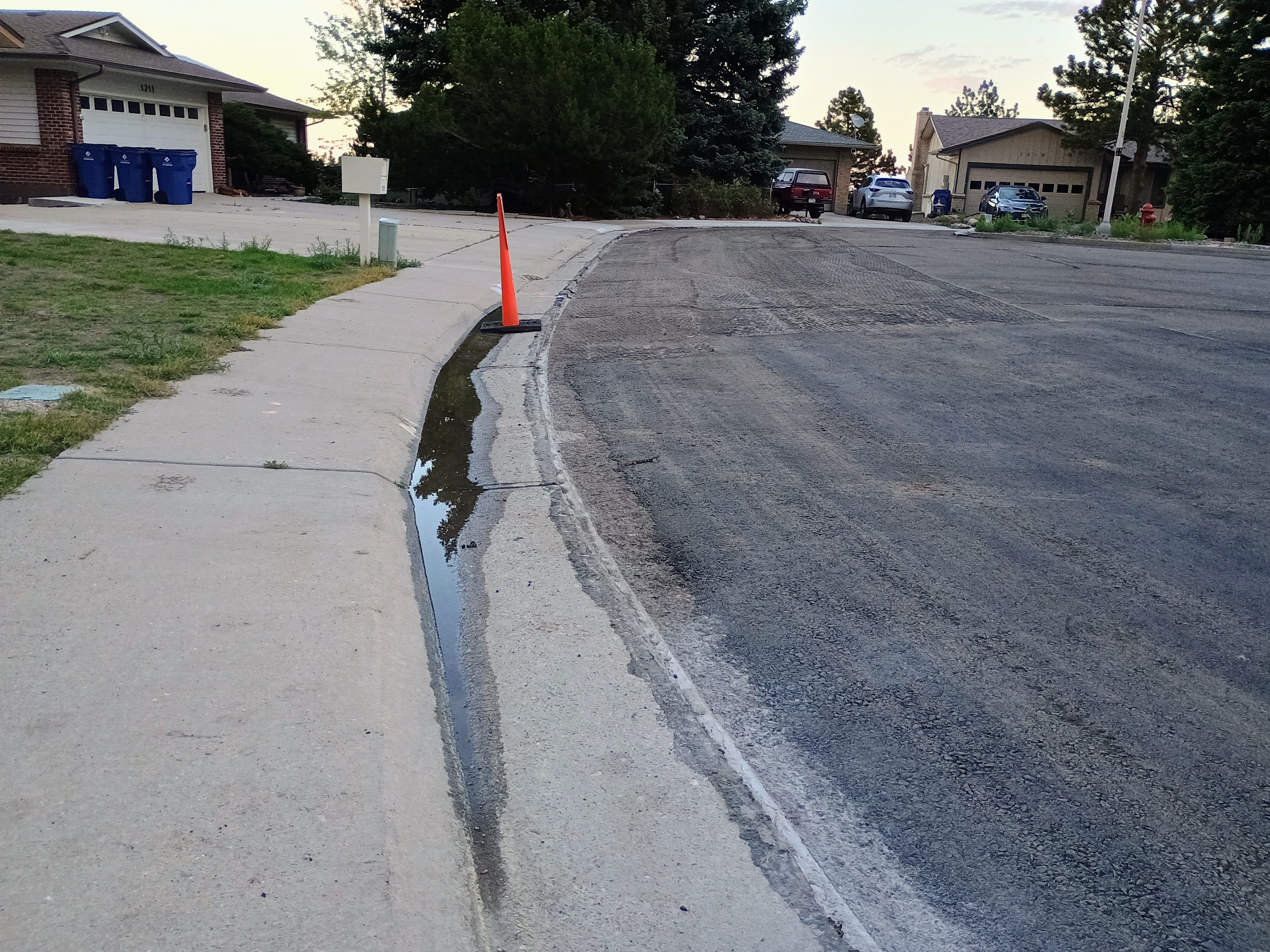
I guess a part of me that’s like a squirrel that gets zapped on an electric fence, but keeps climbing on it thinking there is a stash of peanuts on the other side, so I started asking about how is storm water fund allocated amongst the city wards a little while ago. Here is the language of the CORA request I sent to the City in April of 2023:
“Accounting of dollars spent on storm water improvements in Ward 4 for the period from 2018-2023. This can be a table of projects with dollars or, if there is one, a website location showing the expenditures.”
To which the City promptly replied with:
On Mon, Aug 14, 2023, 16:23 Shared-PublicRecordsRequests <PublicRecordsRequests@lakewood.org> wrote:
At the City of Lakewood, we track organizational revenues and expenses at the organization level and do not break it up by Ward. With that being said, we do not have the information that was requested as that is now how the information is stored.
Kewl, kewl. Onward:
“Then where would one find the organizational level information for Lakewood utilities?”
On Thu, Aug 17, 2023 at 11:19 AM Shared-PublicRecordsRequests <PublicRecordsRequests@lakewood.org> wrote:
Per our finance team they recommend you use the Annual Comprehensive Financial Report (ACFR) located at https://www.lakewood.org/Government/Departments/Finance in Financial Reports and to reference the Stormwater Fund in the corresponding years requested. The 2023 actuals will not be included in this as those financials have not been audited and will not be audited until 2024.
English being my second language, perhaps there is something that I missed in the Financial Report as it pertains to the storm-water-related expenditures, so I kept asking stupid questions, this time directing them at UtilityBilling@lakewood.org:
“We live in Ward 4, near the Green Mountain. There are no storm drains or other, visible, infrastructure components that might be stormwater related. Could you provide an explanation of what we are paying the Stormwater charge for in this part of the neighborhood. As in - what is that fee actually spent on to benefit our neighborhood?
It is not immediately obvious from the budget document, nor does the website seem to provide a neighborhood-specific breakdown.”
A very helpful customer service representative did provide a wall of text which was “taken from our lakewood.org/flow page and also from the FAQs”, with some of the highlights being:
This once-a-year charge fluctuates each year based on inflation.
The 2024 stormwater utility charge is $56.88 for single-family homes and duplexes.
Runoff from significant storms can cause flooding in Lakewood that affects homeowners, businesses, roads, public facilities and private property. The city’s stormwater management utility serves these purposes:
Protect lives and the environment.
Decrease frequency and severity of flooding.
Reduce damage to homes, businesses and private property.
Protect city streets, recreational trails, parks and other community assets that can affect everyone in the city if flooding damages or destroys them.
Improve water quality.
…
The stormwater management utility charge pays to accomplish the following:
Protect lives and the environment.
Decrease the frequency and severity of flooding.
Reduce damage to homes, businesses and private property.
Protect streets, parks, trails and other community assets that can affect everyone if damaged or destroyed by flooding.
Improve water quality, protect the aquatic environment, monitor water quality and resolve pollution issues.
Fund improvements and replace aging or deteriorated parts of the drainage system.
…
It also benefits everyone in these ways:
Effective stormwater management provides environmental, social, and economic benefits. When stormwater management is done properly, streams, rivers, and lakes are cleaner; flood risks are reduced; costs due to flood damage decrease; and the community’s quality of life increases.
Without maintenance, many drainage facilities lose their capacity to handle the amount of water for which they were designed.
Debris and pollutants are washed into the drainage system where it decreases the capacity of flow and destroys aquatic ecosystems.
If one looks at the items touted in the above response, and then takes a stroll around Ward 4 (the above pictures are just the tip of the iceberg), one starts to wonder about the “maintenance” and “capacity to handle” and “environmental, social, and economic benefits” and “Reduce damage to homes, businesses and private property”. George Carlin did always advise to be weary of receiving customer service. Or something to that effect.
Which brings us to this here year, where those who pay the said storm water fee got that 50% increase. So, I figured I’d ask:
“We received the stormwater bill and it has gone up from $59.88 to $89.88, a 50.1% increase. Please provide a succinct explanation for such a drastic increase.
Furthermore, in our neighborhood, there are no stormwater sewers. So, are we paying for improvement(s) well outside of our neighborhood, subsidizing the needed work the city has fallen behind on?”
To which, I got this reply:
“On Mon, Feb 9, 2026 at 11:17 AM UtilityBilling <UtilityBilling@lakewood.org> wrote:
Hello, thank you for reaching out.
Every developed property generates stormwater runoff that flows into the City’s drainage system. This system must be properly maintained and improved to reduce or prevent flooding, which can impact the entire community. Driveways, parking lots, and rooftops across the city all contribute to stormwater runoff during rain events. For this reason, it is most equitable for all developed properties to pay a charge that is proportional to an estimate of the amount of runoff generated by each property.
More information on stormwater can be found at Stormwater - City of Lakewood, CO.
The recent rate increase was calculated based on the documented needs of the stormwater drainage system. The additional revenue is intended to support the replacement of aging infrastructure, address more than 100 known flooding issues, meet increasing maintenance demands, and ensure compliance with state and federal regulatory requirements. The proposed rate increase was formally presented to Lakewood City Council at the August 11, 2025, City Council meeting. The proposal was discussed during this public meeting and subsequently approved by a vote of City Council.
City Council meetings are open to the public, and residents are encouraged to attend, provide public comment, or review meeting materials and recordings. Information specific to the August 11 meeting, including the agenda packet and supporting documents related to the rate increase, can be accessed directly at https://lakewoodspeaks.org/meetings/921. The rate increase followed the City’s established public process for utility rate review and approval.
Stormwater utility bills are typically issued in January and due in April. We recognize that for some residents, this may be the first time they are becoming aware of the approved rate increase and that the change represents a significant increase. To help accommodate this rate increase, the City has extended the payment due date to June 15 to provide additional time for residents to plan and submit payment.
Please let us know if you have any additional questions or would like further information
Thanks, and have a great day!”
It’s always a great day when one gets a 50% fee increase, after paying the said fee for years and getting nothing in return, so I continued to ask:
“Thank you for the email.
Quite a few people are aware of the public meetings, it’s just the City Council and some of the city staff (think the planning department and city manager’s office) have made it pretty obvious that if one has an opinion opposing whatever policy the city council and the aforementioned staff have decided to shove through, the citizen’s voice will then be ignored and, in a lot of cases, ostracized. Hence, quite a few people don’t participate in the said public meetings. Therefore, one could argue that simply saying “well, there was a meeting about this” is not a sufficient notice.
By the way, the only recorded public comment for that issue during the meeting (https://lakewoodspeaks.org/items/4499), on the record, was this:
“A 50% rate increase? Can you increase the fee any higher? Might as well make it a 100% increase. You wouldn’t vote to give a lady the $25 mill Levy break so she could buy groceries. Twenty-Five Dollars. Now you’re going to increase her Stormwater fee by $29.94. Damn the city staff and city council is greedy no heart. Do you wonder if she lost her home? Do you wonder if she bought her groceries. I look at you today. You don’t care! I never understood this fee. I was opposed to this fee it didn’t make any sense. It’s just a money grab. If it was a tax you needed voter approval but you threw in a stormwater fee stormwater charge. Brilliant ! City Council never ceases to amaze me. Maybe I should say city staff City Manager never ceases to amaze me. Is that what they do all day think of ways to screw the taxpayers the constituents.!”
The grammar/spelling is verbatim from the citizen’s comment.
Drastic increases such as this are an indication of poor management for years prior, whereby maintenance and improvements were deferred for far too long. While structural issues kept piling up, without being properly addressed gradually. While the rates could’ve also been increased gradually, commensurate with the work actually being done.
Which also begs the question - why is the storm water run-off not paid for from the general fund? This would not have anything to do with the fact that the city has been mismanaging the budget for... well, most of the time we’ve lived here (10+ years)? As in, for the last several years running, the city has been overspending by 10’s of millions vs. what it takes in. While thousands of city residents pay hundreds (if not thousands) in taxes to the city, per resident.
2024: Revenues: $259.9 - Expenditures: $291.4 = - $31.5
2025: Revenues: $296.2 - Expenditures: $345.3 = - $49.1
2026: Revenues: $280.5 - Expenditures: $313.4 = - $32.9
Numbers are in millions of dollars.
Which also begs the question - where are these “100 known flooding issues”? Driving around Ward 4 (and other wards as well), I have not seen much in terms of storm water run off work. As I said, our part of the neighborhood does not even have storm drains at all, which may have possibly caused additional issues with water inundation into people’s properties. Should we present the bills for foundation work to the city then?
Here is but a small example of how the lack of city storm water drains causes issues in the Green Mountain Neighborhood (this was in July of 2019):
Furthermore, when I was on the Board of Green Mountain Water and Sanitation District, the District had to contend with an issue where the City’s lack of proper storm water run-off and erosion management was causing issues with a bridge in the ravine behind the Dunstan middle school. And, it seems as if that still has not been addressed, years later.
As far as how the fees are calculated... On the utility’s page (https://www.lakewoodco.gov/City-Hall/Departments/Finance/Go-with-the-Flow-Lakewood-Utilities-information/Stormwater), it is stated:
“All other property owners in Lakewood, including townhomes, city and other government buildings, and nonprofit organizations, will be billed annually based on $7.49 per month for every 2,250 square feet of impervious area on the property. For example, a large, big box store with 481,600 square feet of impervious area will receive a bill of $19,234.32 (481,600/2250 = 214 x $7.49 = $1,602.86 per month x 12 months = annual bill of $19,234.32).”
What about commercially-sized apartment compounds/buildings? Are they “townhomes” or are they... what?
Here is an example of water run-off around apartments behind the Safeway on Green Mountain. Has that development been made to pay a fair share of storm water mitigation due to the impervious surfaces added? And are there proper adjustment factors for such developments vs. making the rest of the residents to, basically, subsidize their fees?
Since the representative did not seem to be able to provide an actual detailed accounting as to where tens of thousands (maybe millions?) of dollars of storm water fees paid by the residents of Ward 4 have gone over the years, I continued to ask (on March 3rd, 2026):
“As of yet, I I have not received any plausible explanation as to why the residents of Green Mountain need to subsidize the storm sewer build out needed due to the city’s development decisions or in the areas of the city which have nothing of benefit for the residents of Ward 4 (so, not jobs, not transportation or actual amenities of substance).
In effect, in some cases, we are being forced to subsidize poor planning decisions by the city (such as placing businesses in flood prone areas in some areas along Colfax).
Nor have any answers have been provided in this or previous exchanges as to why some parts of Green Mountain neighborhood have no city storm sewer infrastructure while we keep paying the fees.
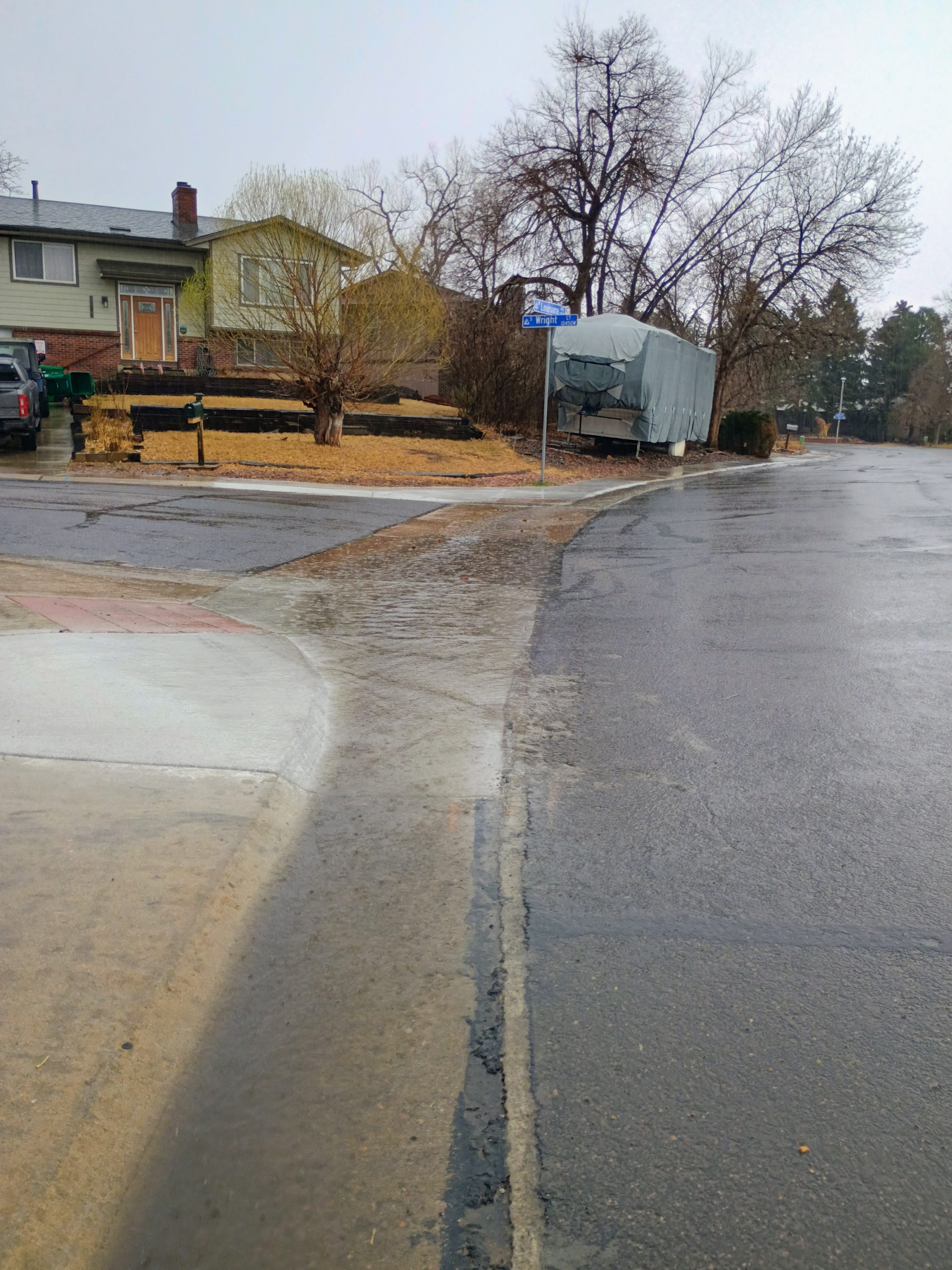
The picture is of the flow in our neighborhood today - there is no storm sewer infrastructure.
Looking forward to some explanations.“
Then, someone from the engineering side of things responded on March 16th:
“I was forwarded your concerns by our billing department about your Stormwater bill.
I am the City Stormwater Engineer and help manage the Stormwater program. Hopefully I can help by providing a little more background. The Stormwater utility fund was set up as a separate utility fund, similar to other local jurisdictions, to fund the stormwater utility. The fund is only used to pay for stormwater needs. In previous years, this fund was used to maintain the existing infrastructure (repairs, cleaning, inspections etc.). In addition, the city is constructing a large stormwater project along W Colfax Avenue (https://www.lakewoodco.gov/City-Hall/Departments/Public-Works/North-Dry-Gulch-Improvements). There is little money left to implement other projects that are needed throughout the city to address stormwater needs. Over the last year, we have worked with a consultant to help determine a rate that would fund both maintenance and construction of new stormwater infrastructure to help mitigate local flooding problems. These problems are currently identified by resident reporting of property damage or street flooding. The city is in the process of creating a city-wide model that will help identify and prioritize the most severe at-risk areas. These projects will be implemented as money and time are available.
I understand the burden of such a large increase at one time. This is truly to be able to provide a better service to our residents when it comes to stormwater infrastructure.“
Hmm. “The city is in the process of creating a city-wide model that will help identify and prioritize the most severe at-risk areas. These projects will be implemented as money and time are available.” And, what-in-the-ever-living-waste-of-taxpayer-funds has the city been doing for the last several decades of collecting the storm sewer fees?
So, lets do a tally here:
The city has been collecting thousands (millions?) in storm water fees for years (decades?).
The city has now decided to spend thousands (millions?) on storm water mitigation in an area of the city that brings no economic benefit to those paying the fees.
The city has not done any visible maintenance or upkeep on any number of storm sewer and erosion control infrastructure items for years (decades?).
Both Wendi Strom’s (current mayor) and Adam Paul’s (previous mayor) administrations have overseen a visible economic decline of the city.
Instead of economic development, dubious planning decisions were made, resulting in further stress on the city’s finances and infrastructure. Even a developer will tell you that residential development is not that great for the city or county coffers.
The city is now spending your storm water fees on storm water projects of no actual or economic benefit to you.
Did we miss anything? I guess this is what was meant by “it is most equitable for all developed properties to pay a charge that is proportional to an estimate of the amount of runoff generated by each property” above? Money down the drain, indeed.